

On this page ▾
- Why Commercial AC Units Freeze in Webster
- Immediate Steps When You Discover a Frozen AC Unit
- Step 1: Switch to Fan-Only Mode
- Step 2: Check and Replace Air Filters
- Step 3: Inspect Supply and Return Vents
- Step 4: Document the Situation
- Step 5: Prepare for Water Management
- Common Causes of Commercial AC Freeze-Ups
- Refrigerant Leaks and Low Charge
- Blower Motor and Fan Problems
- Dirty Evaporator Coils
- Thermostat and Control Failures
- Expansion Valve or Metering Device Issues
- When to Call Emergency HVAC Service
- Call Immediately If:
- Can Wait Until Morning If:
- Preventing Future AC Freeze-Ups
- Establish Monthly Filter Schedules
- Schedule Preventive Maintenance
- Install Low-Temperature Alarms
- Review Night and Weekend Setpoints
- Address Underlying Issues Promptly
- Frequently Asked Questions
- Have Questions About Your Frozen AC Unit?
- Need Emergency HVAC Service?
- Frequently Asked Questions
- How often should commercial HVAC systems be serviced?
- What is the average lifespan of commercial HVAC equipment?
- Do you offer emergency HVAC repair services?
- Related HVAC Services
A frozen AC unit at 2 AM creates immediate panic for Webster facility managers and business owners. Your building temperature rises rapidly, employees arriving in the morning face uncomfortable conditions, and perishable inventory or sensitive equipment may be at risk. Understanding how to respond to this common after-hours emergency—and when to call for professional help—can mean the difference between a minor inconvenience and a costly disaster.
Why Commercial AC Units Freeze in Webster
Commercial air conditioning systems in Webster face unique challenges that residential units never encounter. The combination of extreme summer heat, Gulf Coast humidity averaging 75-90%, and the demands of cooling large commercial spaces creates conditions where freeze-ups become surprisingly common—even when outdoor temperatures exceed 95°F.
The physics behind a frozen AC unit involves the relationship between refrigerant pressure, airflow, and heat exchange. Your evaporator coil absorbs heat from indoor air, and refrigerant inside the coil evaporates as part of this process. When something disrupts this balance—restricted airflow, low refrigerant, or mechanical failures—coil temperatures drop below freezing and moisture in the air crystallizes into ice.
Houston's humidity makes this worse. Every cubic foot of air your system processes contains significantly more moisture than drier climates. This moisture condenses on already-cold coils, and when temperatures drop below 32°F, ice builds rapidly. A coil that might frost slightly in Arizona can develop inches of ice in Webster within hours.
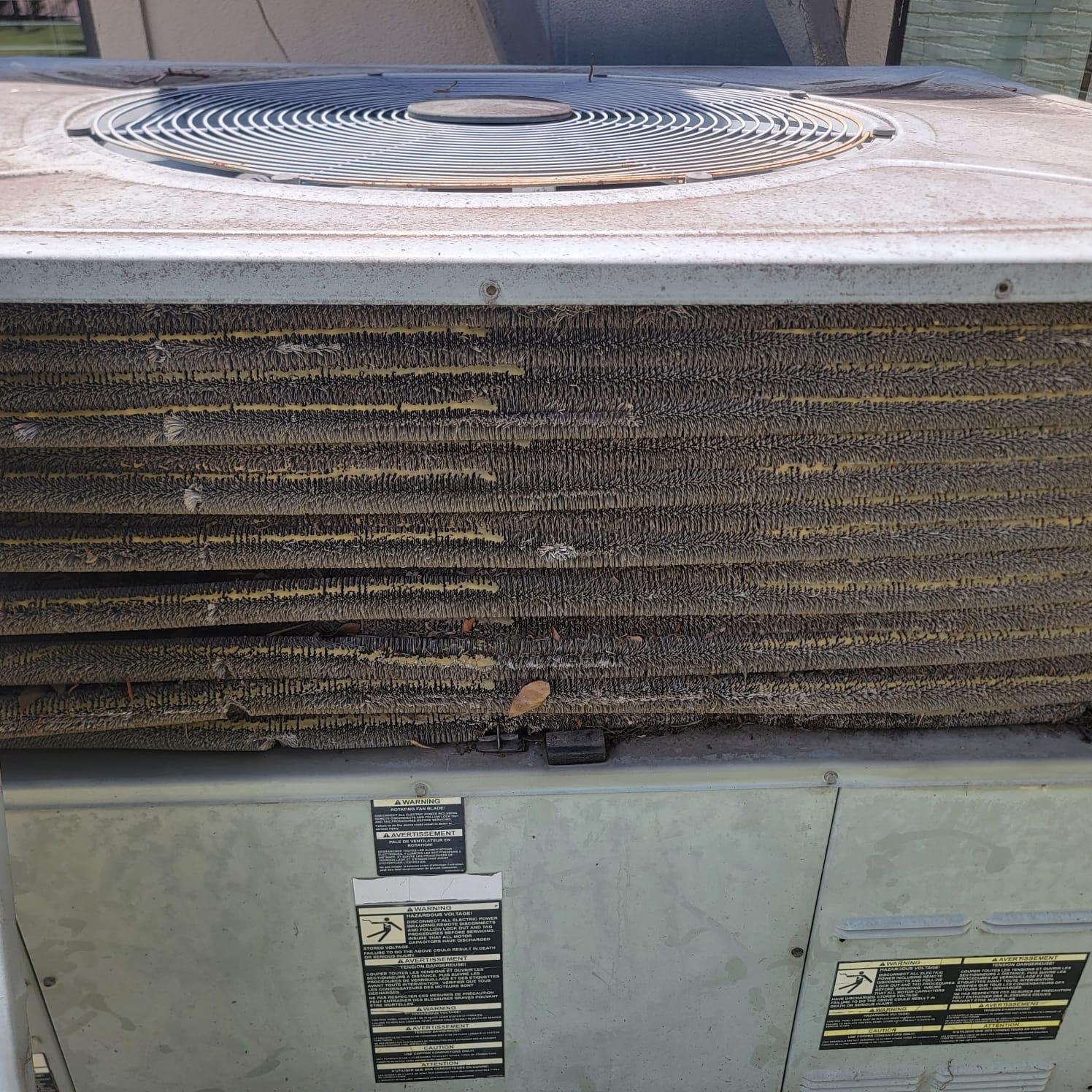
Immediate Steps When You Discover a Frozen AC Unit
Discovering ice on your commercial AC unit during after-hours requires immediate but measured action. Panicked responses often cause additional damage, while ignoring the problem allows ice to spread and potentially harm compressor components.
Step 1: Switch to Fan-Only Mode
Locate your thermostat or building automation system and switch from cooling mode to fan-only operation. This keeps air circulating across the frozen coils, using the warmer building air to gradually thaw ice. Never turn the system completely off unless you smell burning or see sparks—the fan accelerates thawing significantly.
Step 2: Check and Replace Air Filters
Clogged filters are the leading cause of commercial AC freeze-ups. If you can safely access your air handler, check filter condition. Severely restricted filters should be replaced immediately—even temporary replacement with a lower-MERV filter is better than no airflow. Keep spare filters on-site for exactly this situation.
Step 3: Inspect Supply and Return Vents
Walk through your facility checking that supply and return vents remain unobstructed. After-hours cleaning crews sometimes stack boxes or furniture against vents, and closed dampers in unoccupied zones can create system-wide airflow problems affecting operating areas.
Step 4: Document the Situation
Take photos of ice accumulation, thermostat settings, and filter condition. This documentation helps technicians diagnose underlying causes and provides evidence if warranty claims become necessary. Note the time you discovered the problem and any unusual events preceding it.
Step 5: Prepare for Water Management
As ice melts, significant water will drain from your system. Ensure floor drains near air handlers remain clear. Position towels or a wet-dry vacuum to catch overflow if drain pans cannot handle the volume. Water damage to flooring, equipment, or inventory below air handlers can exceed the cost of AC repairs.
HVAC trouble can't wait in Webster heat
Our licensed techs are standing by 24/7 for fast, reliable service.
Common Causes of Commercial AC Freeze-Ups
Understanding why your AC froze helps prevent recurrence and guides repair decisions. Most freeze-ups trace to one of five root causes:
Refrigerant Leaks and Low Charge
Commercial AC systems require precise refrigerant charges to operate correctly. Even small leaks cause pressure drops that lower evaporator coil temperatures below freezing. Houston's heat accelerates refrigerant degradation, and vibration from rooftop units loosens connections over time. Signs include gradual cooling capacity loss before the freeze-up and hissing sounds near refrigerant lines.
Blower Motor and Fan Problems
Your blower motor moves air across evaporator coils, carrying heat that keeps coils above freezing. Failing motors slow gradually—often unnoticed until freeze-ups occur. Belt-driven systems may have slipping or broken belts. Listen for unusual motor sounds and check that supply air velocity feels normal at vents throughout your building.
Dirty Evaporator Coils
Evaporator coils accumulate dust, debris, and biological growth over time, insulating them from proper heat transfer. Houston's humidity encourages mold and mildew that further restrict airflow and heat exchange. Annual coil cleaning prevents this buildup, but neglected systems can freeze even with clean filters.
Thermostat and Control Failures
Malfunctioning thermostats may call for cooling when temperatures already meet setpoints, running systems continuously until freeze-ups occur. Building automation system errors can override normal operation, and failed sensors report incorrect temperatures. Programmers setting aggressive night setbacks may cause problems when systems try to recover.
Expansion Valve or Metering Device Issues
These components control refrigerant flow into evaporator coils. Stuck or failing metering devices can flood coils with too much refrigerant, dropping temperatures below normal operating ranges. This typically requires professional diagnosis and repair, as improper adjustment worsens the problem.
When to Call Emergency HVAC Service
Some frozen AC situations require immediate professional intervention, while others can wait for regular business hours. Knowing the difference saves money without risking equipment or building conditions.
Call Immediately If:
- Ice extends beyond evaporator coils to refrigerant lines, compressor, or outdoor unit
- You smell burning or see smoke from any system component
- Building temperatures exceed safe limits for occupants, equipment, or inventory
- Water damage threatens critical equipment, documents, or inventory
- The system won't switch modes or respond to thermostat commands
- Multiple units freeze simultaneously indicating building-wide issues
Can Wait Until Morning If:
- Ice is limited to evaporator coils and thawing with fan operation
- Building temperature remains acceptable for morning occupancy
- No water damage is occurring or threatening
- This is the first freeze-up and no obvious mechanical failures exist
Preventing Future AC Freeze-Ups
After resolving an emergency freeze-up, implementing prevention strategies protects your business from repeat incidents. Most prevention measures cost far less than emergency repairs and building downtime.
Establish Monthly Filter Schedules
Commercial buildings should check filters monthly and replace them based on actual condition rather than arbitrary schedules. High-traffic facilities, buildings near construction, and spaces with unusual dust sources may need more frequent changes. Assign specific staff responsibility and maintain replacement filter inventory.
Schedule Preventive Maintenance
Professional preventive maintenance programs catch refrigerant leaks, coil contamination, and component wear before they cause emergencies. HVAC247PRO maintenance agreements include priority scheduling, reduced emergency rates, and comprehensive inspections that identify problems early.
Install Low-Temperature Alarms
Building automation systems can monitor evaporator coil temperatures and alert facility managers when readings approach freezing. Simple standalone sensors with cellular alerts provide similar protection for buildings without full BAS installations. Early warning allows intervention before ice forms.
Review Night and Weekend Setpoints
Aggressive temperature setbacks save energy but stress cooling systems during recovery periods. Ensure setback-to-occupied transitions allow adequate time for gradual temperature changes. Consider maintaining slightly higher setpoints during unoccupied periods rather than extreme energy-saving settings that risk freeze-ups.
Address Underlying Issues Promptly
Freeze-ups rarely occur in perfectly maintained systems. If your unit froze once, underlying issues likely exist even after thawing and restarting. Schedule diagnostic service to identify root causes—the investment prevents more costly emergency repairs during your busiest periods.
Frequently Asked Questions
Commercial AC units commonly freeze at night due to reduced airflow from dirty filters, low refrigerant levels, or thermostat malfunctions. Houston's humidity compounds these issues as moisture accumulates on evaporator coils. After-hours operation without building occupancy can mask early warning signs until ice formation becomes severe enough to trigger complete system shutdown.
Yes, turn off the cooling function immediately but leave the fan running. This allows warm air to circulate over frozen coils, accelerating the thawing process without causing water damage. Never attempt to chip away ice manually as this damages delicate evaporator coil fins. Contact HVAC247PRO at (346) 451-1559 for emergency diagnosis while the unit thaws.
Commercial AC units typically require 2-4 hours to fully thaw depending on ice severity and ambient temperature. Larger rooftop units with extensive ice buildup may take 6-8 hours. Running the fan continuously speeds this process. Have towels and a wet-dry vacuum ready to manage water runoff and prevent floor damage in mechanical rooms.
Repeated freezing typically indicates underlying issues requiring professional repair: refrigerant leaks reducing system charge, failing blower motors restricting airflow, dirty evaporator coils insulating heat transfer, or malfunctioning expansion valves. Houston's extreme humidity accelerates these problems. HVAC247PRO technicians diagnose root causes to prevent recurring emergencies.
After-hours frozen AC repairs in Webster range from $250-$800 depending on the underlying cause. Simple refrigerant recharges cost $300-$500, while blower motor replacements run $400-$800. HVAC247PRO provides upfront pricing before repairs begin with no hidden after-hours surcharges for commercial clients on service agreements.
Have Questions About Your Frozen AC Unit?
Our licensed technicians are ready to help. Get expert advice from Houston's trusted commercial HVAC professionals.
Need Emergency HVAC Service?
Frequently Asked Questions
How often should commercial HVAC systems be serviced?
commercial HVAC systems should be serviced at least twice per year - once before cooling season and once before heating season. High-use facilities may require quarterly maintenance.
What is the average lifespan of commercial HVAC equipment?
commercial HVAC equipment typically lasts 15-20 years with proper maintenance. Rooftop units average 15 years, while chillers can last 20-30 years with regular service.
Do you offer emergency HVAC repair services?
Yes, HVAC247PRO provides 24/7 emergency commercial HVAC repair services throughout Webster. Our licensed technicians respond within 60-90 minutes for urgent situations.
Related HVAC Services
AC Repair
Professional AC Repair services
AC Maintenance
Prevent emergencies with maintenance
All services performed by TX Licensed Contractor TACLB00105442E
Frequently Asked Questions
Why Commercial AC Units Freeze in Webster?
Commercial air conditioning systems in Webster face unique challenges that residential units never encounter. The combination of extreme summer heat, Gulf Coast humidity averaging 75-90%, and the demands of cooling large commercial spaces creates conditions where freeze-ups become surprisingly common—even when…
What should you know about Immediate Steps When You Discover a Frozen AC Unit?
Discovering ice on your commercial AC unit during after-hours requires immediate but measured action. Panicked responses often cause additional damage, while ignoring the problem allows ice to spread and potentially harm compressor components.
What should you know about Common Causes of Commercial AC Freeze-Ups?
Understanding why your AC froze helps prevent recurrence and guides repair decisions. Most freeze-ups trace to one of five root causes:
When to Call Emergency HVAC Service?
Some frozen AC situations require immediate professional intervention, while others can wait for regular business hours. Knowing the difference saves money without risking equipment or building conditions.
What should you know about Future AC Freeze-Ups?
After resolving an emergency freeze-up, implementing prevention strategies protects your business from repeat incidents. Most prevention measures cost far less than emergency repairs and building downtime.


